
THE TRAP OF POVERTY
To get out of poverty, people need opportunities such as education, clean water, medical facilities and financial resources. For instance, access to education will favor future income creation. Public facilities will also allow people to spend more time earning an income rather than performing survival chores. Without these elements, poverty becomes a cycle from one generation to the next.
To end extreme poverty, the U.N. estimates that the total cost per year would be about $175 billion, less than 1% of the combined income of the richest countries in the world. But pure monetary help remains limited.
So could technology play a role?
TECHNOLOGICAL SOLUTIONS TO FIGHT POVERTY
Technology is everywhere in developed countries. It is so omnipresent that we have forgotten how it changed our way of life. However, when we look at it, there are now plenty of solutions which could be used to alleviate poverty in the world.
Digital technologies and research are some of the most powerful solutions to foster the share of prosperity on earth:
- Internet access, via land lines or mobile technology, has been spreading rapidly. The United Nations reports that more people in the world have access to cellphones than justice or legal services. This has given a large part of the world population access to information as well as an opportunity to make their voices heard, or sometimes even give them access to e-markets.
- Digitalization is of course a way of sharing information without borders and subsequently raising awareness of poverty issues.
- It gave NGOs (including small ones) a much broader and direct access to private donors who can contribute to this cause by sending money in just a click.
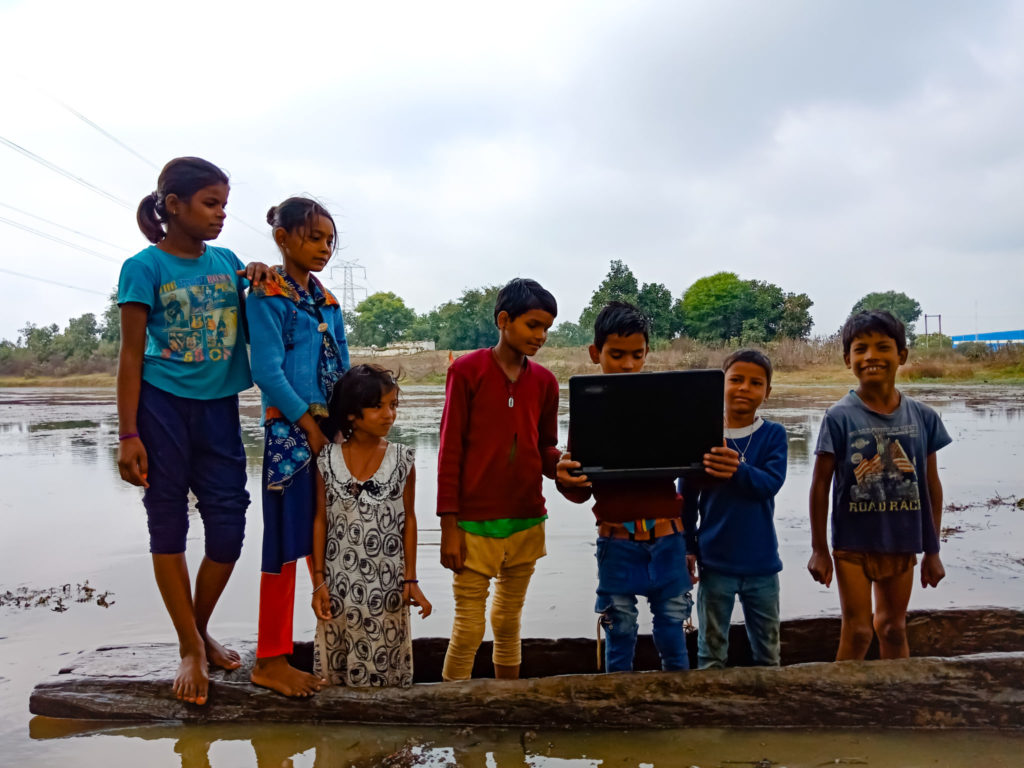
- Solar-powered computers and mobile networks have helped disadvantaged kids in rural areas with limited access to education.
- Thanks to cell phones, Mobile healthcare also offers access to medical information usually inaccessible to impoverished people.
- There are large ongoing programs to roll out Digital identities which can make a huge difference to the lives of the poor by providing financial access and preventing intermediary fraud and corruption.
- Mobile banking is indisputably the best solution to provide access to banking without transaction costs and without the need of a physical bank. In that way, savings are being kept from theft and investments are becoming possible.
- Improved farming techniques can be achieved through simple solutions such as access to accurate weather data, but also through more advanced technological endeavors such as researches to make seeds more resistant to specific harsh conditions.
Beyond global digital technologies deployment, specific projects have also arisen to tackle more specific issues. For instance:
- Bitland, a nonprofit group of entrepreneurs from the U.S., Denmark and Ghana, has introduced an innovative digital land registration system combining GPS data, satellite photography and blockchain technology to allow accurate and safe documentation of land borders and ownership. Land ownership rights and property titles are indeed among the most critical yet inaccessible resources in developing countries, but they are paramount to be able to build a stable economic ecosystem.
- Researchers at Stanford University’s Poverty & Technology Lab are now focusing on the use of Machine learning and artificial intelligence to help improve the global food crisis by predicting impoverished regions across the globe and optimize the impact of humanitarian response.
CONCLUSION
By itself, technology might not end poverty, but it certainly allows to create the means, connections and relationships that can break down the systems or the environments which keep people poor. Hundreds of initiatives are already ongoing to help reshape our common future on earth. But further investment in technological solutions by both private organizations and governments will undoubtedly radically change the lives of millions of people.
– By itself, technology might not end poverty, but it certainly allows to create the means, connections and relationships that can break down the systems or the environments which keep people poor –