
Think Twice Before Buying a New Device
The manufacturing of electronic devices has a significant impact on the environment. For instance, as ADEME – the French Agency for Ecological Transition – points out, smartphones are composed of more than 70 materials, including rare metals which lead to both the depletion of non-renewable natural resources and difficulties in recycling. ADEME also reports that a single smartphone travels four times around the world just to complete all the steps of its creation: design, extraction of raw materials, manufacturing of the main components, assembly and distribution[1]. Most people tend to buy many different devices and replace them quickly with the brand-new models, but it is time for all of us to tackle this over-consumption. Your device is still working? Wait a little longer before getting a new one. Your device needs to be repaired? Check your guarantee or go to a Repair Café. The device is dead? Choose a device adapted to your needs with a smaller screen or fewer features. Better yet, consider leasing a device or buying a fairphone or second-hand phone.
Take Care of Your Stuff
The best way to prevent over-consumption, fight against planned obsolescence and save money is to handle your equipment with care. Simple actions can make a great difference, including the following:
- using protective covers and transport cases,
- shutting down or – even better – unplugging unused devices,
- setting your devices to enter sleep mode when you are away for a short period of time,
- lowering the brightness,
- charging the battery before it enters a low-power mode and unplugging the device when it is charged,
- closing unused tabs,
- regularly deleting unused apps
- storing less data.
Stop Binge-Watching
A report from The Shift Project shows that online video streaming in 2018 emitted the same amount of greenhouse gases as the entire country of Spain did that same year, namely 1% of global emissions[2]. Digital sobriety is the best solution to minimize pollution. This consists of reducing the time spent on streaming, being more selective in what you consume and choosing a lower definition. Other efforts will also make a significant difference: downloading the video instead of streaming it, disabling the auto-play system, opting for an audio format and turning off your camera during meetings.
Break Your Bad Email Habits
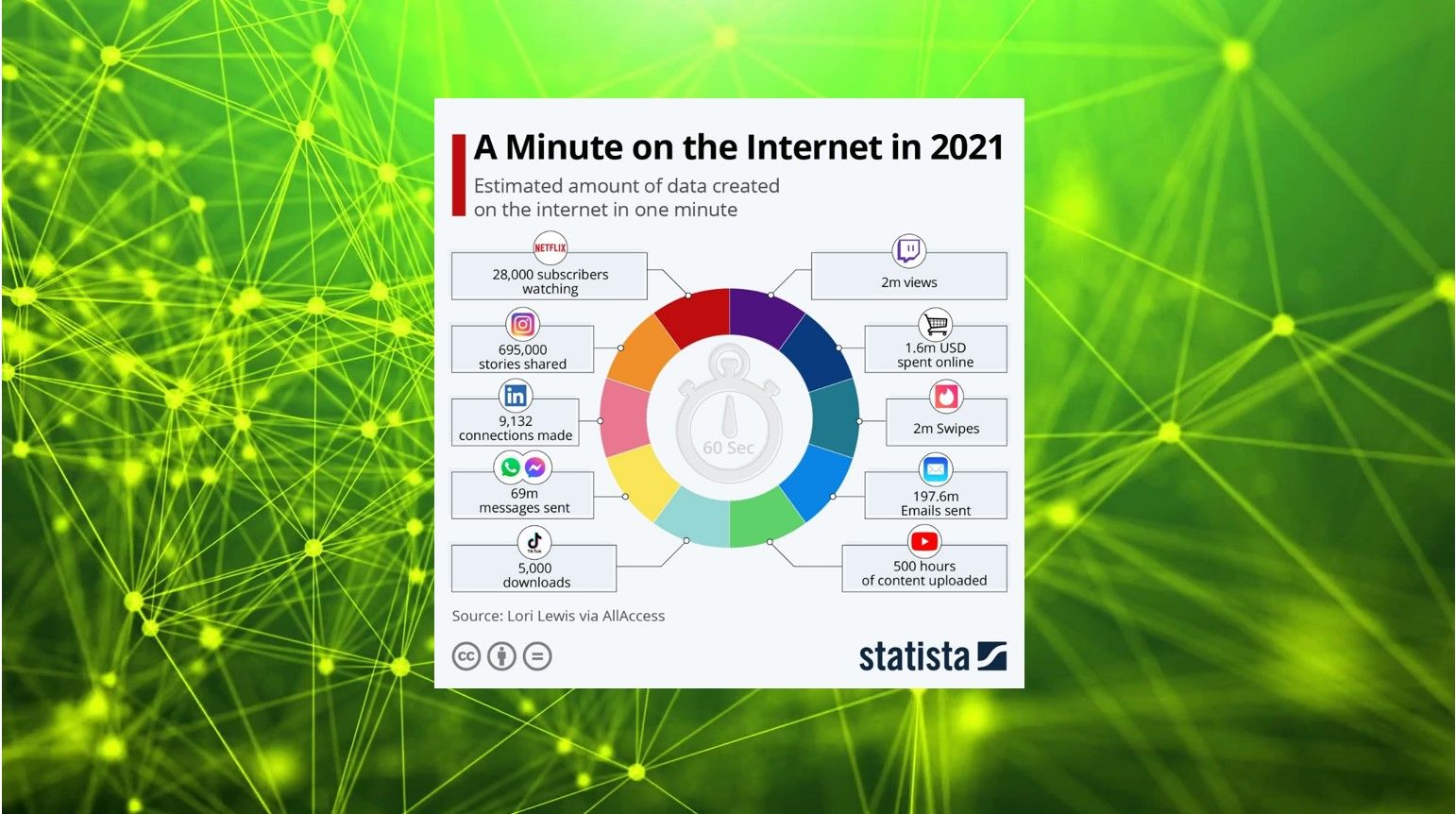
About 3.5 million emails per second were sent globally in 2020 and each email generates approximately 10g of CO2 per year according to Cleanfox, a free tool developed to clean your inbox[3]. We simply must acquire some new habits to preserve the planet. The first suggestion is to discuss in person whenever possible, or to use messaging services such as Whatsapp or Slack to communicate. As another good habit, it is equally important to carefully check the recipients and the content of your emails before sending them. The “reply all” function and corrective or thank-you emails cause an unnecessary multiplication of data and consequently, more pollution. With this in mind, it is worth deleting and unsubscribing from pointless newsletters. Finally, there are several simple and efficient ways to reduce the digital footprint of attachments, including compressing them, exporting them to a USB device or transferring them as a link via WeTransfer.
Print Smartly
A reasoned utilization of the printer will have a positive impact on the Earth. The default parameters should be set to double-sided and black-and-white printing. To go even further, you can also use 100% recycled and (FSC, PEFC or Blue Angel)-certified paper, as well as vegetable inks or remanufactured cartridges.
“Technology cannot rebuild nature.” – Friedrich Schmidt-Bleek [4]
Conclusion
High consumption of water and energy, deforestation, depletion of abiotic resources, contamination of rivers and soils, generation of e-waste and greenhouse gases… the dark side of IT is frankly alarming. Yet, it also has a ton of positive aspects, such as limiting the traffic and the need for travel, giving us the chance to instantly communicate and share information worldwide, as well as developing science, medicine and technology. The Green IT movement encourages users to respond to a need rather than a desire, and to favor more sober and durable devices. This new consumer behavior holds the key to a sustainable future.
If you want to join the team of Triglav Digital or find out about our services, please visit our website.
[1] ADEME, FNE, Les impacts du smartphone, December 2019
[2] THE SHIFT PROJECT, CLIMATE CRISIS: THE UNSUSTAINABLE USE OF ONLINE VIDEO, July 2019
[3] CLEANFOX, Infographic and study carried out by Cleanfox, 2021
[4] INTERVIEW: FRIEDRICH SCHMIDT-BLEEK – “THE HEAVY WEIGHT OF RESOURCE INEFFICIENCY”. November 2015. https://ec.europa.eu/environment/ecoap/about-eco-innovation/experts-interviews/friedrich-schmidt-bleek_en